Early-Stage Capital
5 things we learned from raising money in 2024
No, it’s not just you. It’s VERY hard to raise capital at the moment. I’ve been raising money for pre- and only-just-post-revenue startups since 2012 (around $30m raised in total). Here are 5 important lessons I’ve learned.
- Unless you’re a true tech business (not tech-enabled) and growing by >15% month-on-month, forget VCs. Don’t waste your time (or theirs).
- That includes you, venture studios. We raised money from a VC, but that’s only because we have a deep, long-standing relationship with the GP and he’s not afraid to pick atypical deals that other VCs shun (he invested in Antler’s first round, for example).
- Cold emails won’t work either. They may create interesting connections, but it’s virtually impossible to convert those into funding. (We’ve sent thousands of very personalised mails in the last year. You could count the conversations on one hand, and they resulted in $zero raised.)
- Ignore people who put “angel investor” on their LinkedIn profile. By and large, this is a lead-gen tacti, used by people who want to help you fundraise. They want to take your money, not give you theirs.
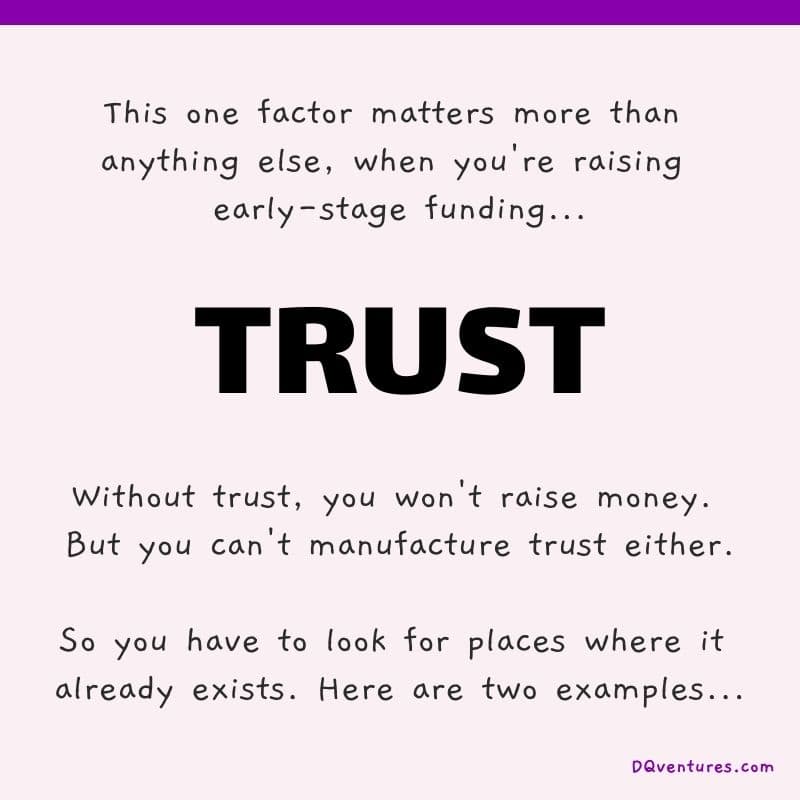
- Early-stage funding is all about one single factor: trust. Without trust, you almost definitely won’t raise money. But you can’t manufacture trust either. You can only look for opportunities where it already exists.Here’s where we’ve had most success:
- Present at pitching events The investors who attend such events are there (usually) because they 𝘢𝘤𝘵𝘶𝘢𝘭𝘭𝘺 𝘩𝘢𝘷𝘦 𝘮𝘰𝘯𝘦𝘺 𝘵𝘰 𝘪𝘯𝘷𝘦𝘴𝘵 (although this varies between events). Crucially, there’s already a degree of trust implied when you stand on stage to pitch. Investors know you had to pass the event’s screening process, which automatically increases your credibility.
- Ask for warm intros at every opportunity. I do this myself. Right now, I am proactively arranging calls with founders I’ve met. They may be people I’ve invested in personally, or those I’ve met over the years. I ask them for feedback on my deck and my pitch, and make it clear I’m not expecting them to invest. Most importantly, once they’ve given feedback, I ask if they know any investors who might be interested. When they think of someone (which invariably they do), I ask for an intro.
Does it work?
Yes. I’m not saying it’s easy, but here are 2 real examples:
- I recently met 6 new investors after pitching at an event in London.
- I just had verbal commitment for another $100K angel investment after a single, 25-minute call, resulting from an intro from a founder I know.